

Glass manufacturing is a delicate dance of chemistry and heat. Whether you are producing architectural panes, delicate laboratory glassware, or everyday bottles, the purity of your raw materials determines the clarity and strength of your final product. Among these essential inputs, industrial sodium hydroxide pearls (caustic soda beads) are widely used in glass processing plants for surface treatment and cleaning operations.

Our expert team ensures that every batch of sodium hydroxide pearls meets the highest industrial standards for glass production.
If you are managing a glass production facility or sourcing chemicals for one, you know that consistency is everything. In this guide, we will break down why 99% pure sodium hydroxide pearls are the preferred choice for modern glass plants and how they compare to other forms of caustic soda.
Why Sodium Hydroxide Pearls Matter in Glass Production
While soda ash is the traditional fluxing agent in glass making, sodium hydroxide (NaOH) pearls offer unique advantages, especially in specialty glass applications and advanced surface treatments. The “pearl” form is particularly valued because it is easy to handle, generates minimal dust, and dissolves uniformly.
For detailed technical grades and purity levels, you can always refer to the product specifications provided by the manufacturer.
The Importance of 99% Purity
In the world of glass, even a tiny amount of iron or heavy metal contamination can turn a clear sheet of glass into a murky green mess. That is why high-purity sodium hydroxide pearls (99%) are non-negotiable for high-end manufacturers.
- Zero Iron Contamination:
Low iron content prevents unwanted tinting in clear glass.
- Predictable Reactions:
High purity ensures predictable reactions during glass processing, surface treatment, and plant cleaning operations.
- Process Stability:
Consistent concentration allows for precise dosing in automated systems.
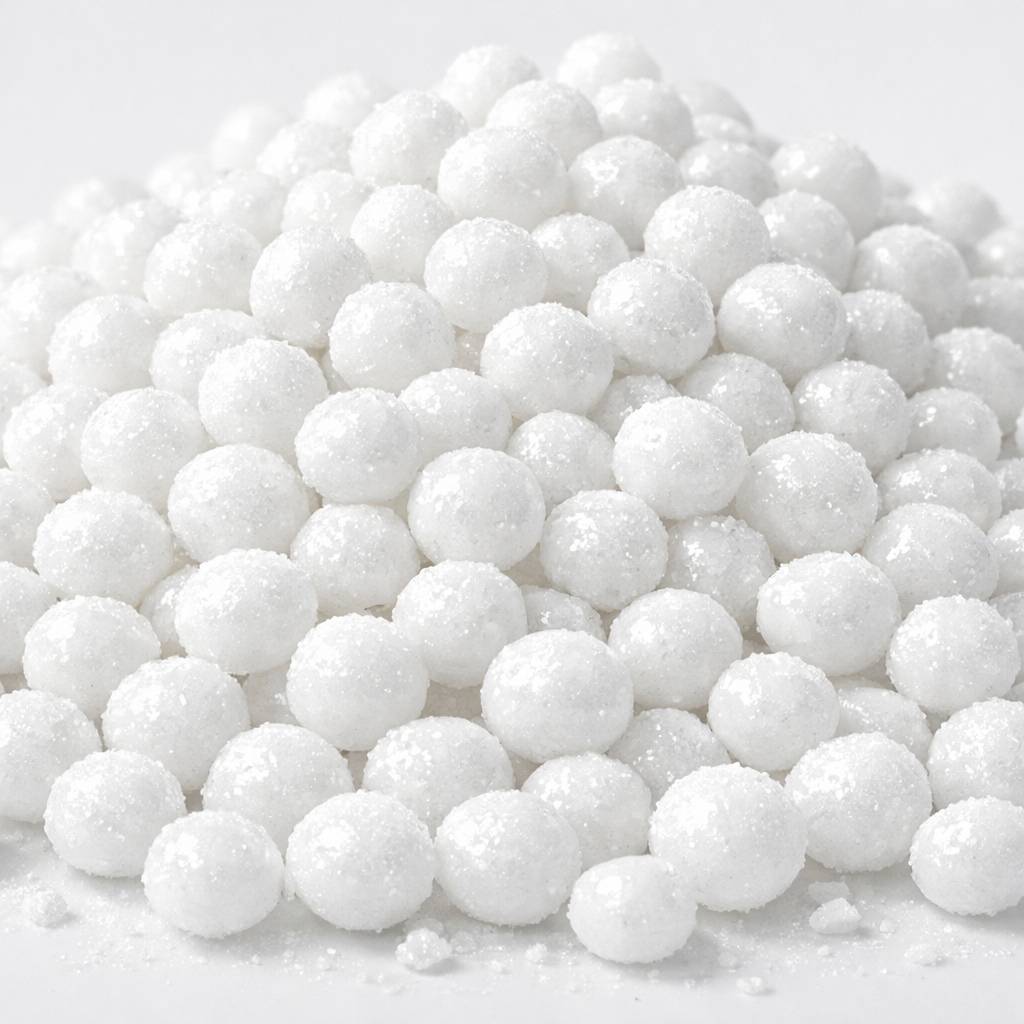
These uniform sodium hydroxide pearls provide the high purity required for precision glass manufacturing processes.
Key Uses of Sodium Hydroxide Pearls in the Glass Industry
How exactly does a caustic chemical help create something as beautiful as glass? The applications are more diverse than you might think.
1. Advanced Surface Treatment and Etching
Sodium hydroxide is widely used for the chemical etching of glass surfaces. By controlled exposure to NaOH, manufacturers can create frosted effects, improve surface cleaning and chemical etching prior to coating or bonding operations.
2. pH Control in Cooling and Processing Water
Glass plants use massive amounts of water for cooling and cutting. Maintaining the right pH is crucial to prevent equipment corrosion and ensure the efficiency of water recycling systems.
3. Raw Material Purification
Before the sand and lime even hit the furnace, sodium hydroxide solutions may be used in glass plant cleaning and raw material processing equipment maintenance, used in maintenance and cleaning of raw material handling equipment in glass plants.
If you’re sourcing in bulk, this caustic soda buying guide explains what to check before placing an order.

Our factory-grade sodium hydroxide pearls support glass surface treatment, equipment cleaning, and water treatment systems in glass plants.
Pearls vs. Flakes: Why Form Selection is Critical
When comparing caustic soda pearls vs flakes, glass manufacturers almost always lean toward pearls. Why? Because the glass furnace is a high-airflow environment. Flakes are thin and brittle; they break apart and create “caustic dust” that can be inhaled by workers or settle on sensitive machinery.
| Parameter | Pearls | Flakes |
| Dust | Low | Higher |
| Flowability | Excellent | Moderate |
| Dissolution | Uniform | Slower |
| Purity | ≥99% | ≥99% |
Using pearls ensures that your dosing is accurate to the gram, which is vital when you are managing a multi-million dollar glass melt.
Technical Requirements for Glass Manufacturers
To achieve the best results, industrial buyers should look for specific technical benchmarks.
| Parameter | Typical Industrial Grade |
| NaOH Purity | ≥ 99.0% |
| Sodium Carbonate | ≤ 0.5–0.8% |
| Sodium Chloride | ≤ 0.05–0.1% |
| Iron (Fe) | ≤ 50 ppm |
| Moisture | ≤0.5% |
You can learn more about these offerings and specifications on the application page.
Safety and Handling in the Glass Plant
Handling a strong alkali like sodium hydroxide requires respect and the right equipment. In a glass plant, where temperatures are already high, safety is even more paramount.
- Dry Storage is King:
NaOH is hygroscopic, meaning it sucks moisture out of the air. If it gets damp, it cakes into a solid block.
- PPE is Non-Negotiable:
Always ensure operators are wearing chemical-resistant gloves, face shields, and aprons.
- Sealed Systems:
For the best results, use automated feeding systems that keep the pearls sealed away from humidity until the moment they are needed.
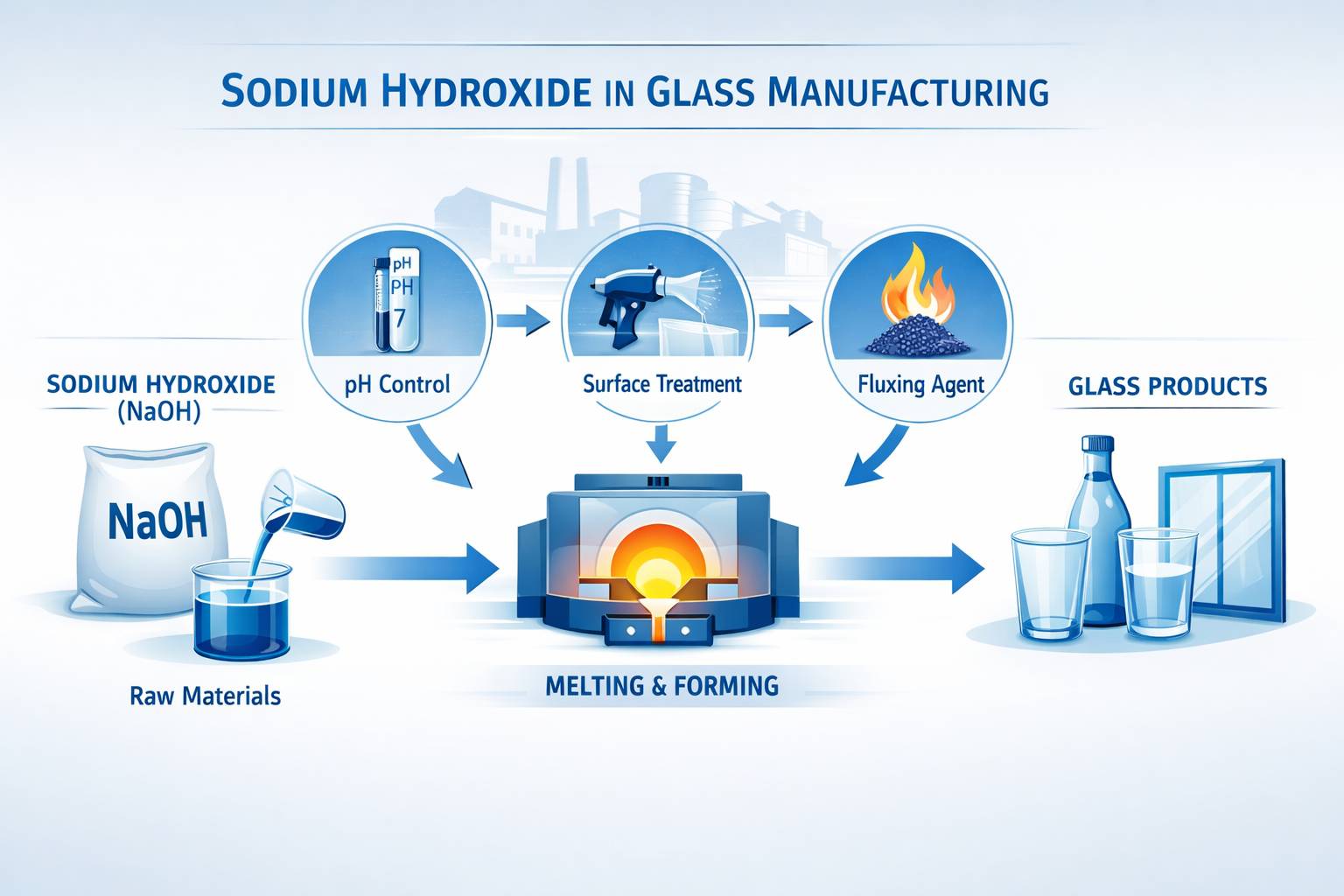
This infographic illustrates how sodium hydroxide pearls are integrated into the melting and surface treatment stages of glass production.
Caustic Soda Pearls: Overview and How to Buy Caustic Soda Pearls
Packaging and Logistics: Protecting Your Investment
When you are importing chemicals from halfway across the world, the packaging is the only thing standing between a high-quality product and a wasted shipment.
Standard packaging for our sodium hydroxide pearls for glass manufacturing includes:
- 25kg Moisture-Resistant Bags:
Triple-layered to prevent air and water ingress.
- Inner Polyethylene Liners:
An extra barrier for maximum purity protection.
- Palletized and Shrink-Wrapped:
Ensuring stability during sea freight and easy handling at your warehouse.
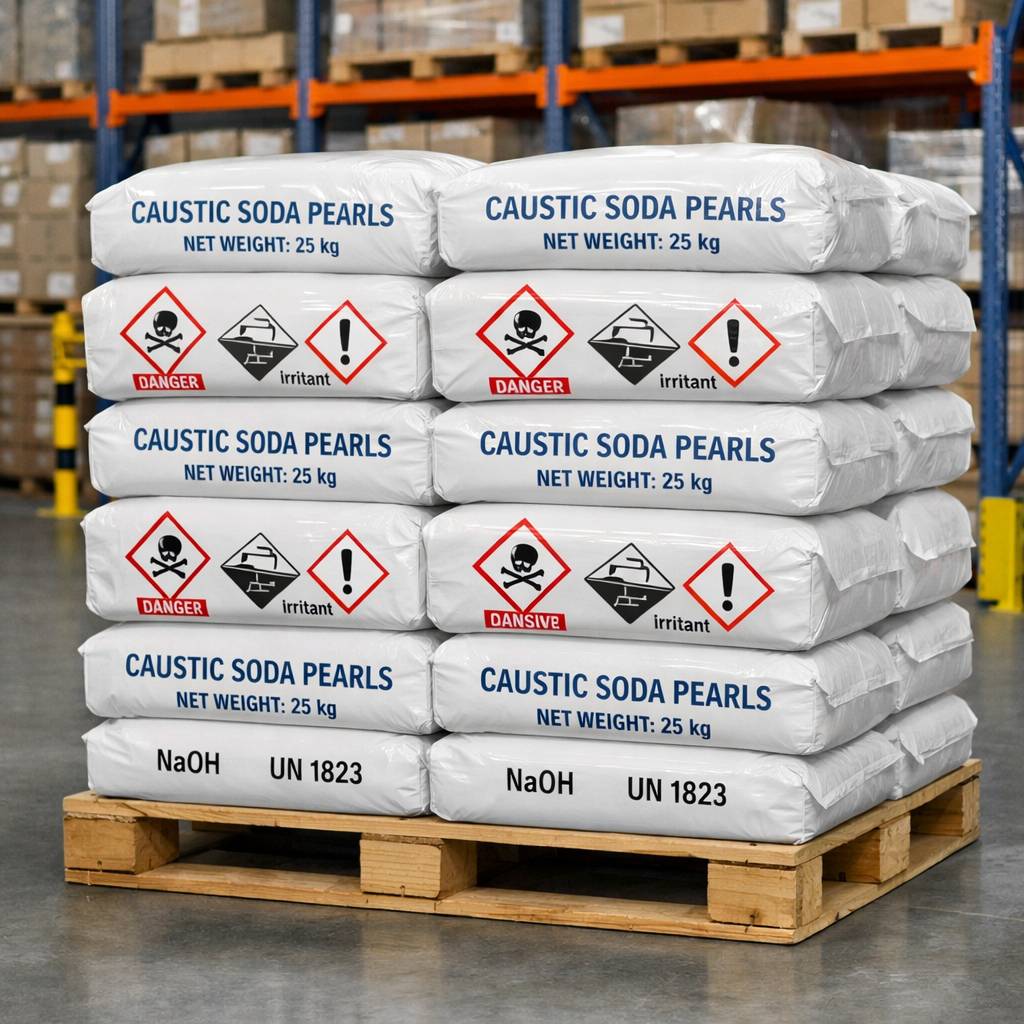
Our 25kg moisture-resistant packaging ensures that your sodium hydroxide pearls arrive in perfect condition.
Sourcing from a Process-Oriented Supplier
Don’t just buy from a trader who doesn’t know the difference between a glass bottle and a window pane. Work with a supplier who understands the glass industry’s unique demands.
We provide batch-specific Certificates of Analysis (COA) and full MSDS documentation with every shipment, ensuring you are always in compliance with international standards like ISO and REACH.
Request the latest COA, SDS, and bulk pricing for ≥99% sodium hydroxide pearls used in glass processing and surface treatment.
WhatsApp Us for Free a Consultation

We manage the entire logistics chain to ensure timely delivery of bulk sodium hydroxide to glass plants worldwide.
Conclusion: So What Does This Mean for Glass Buyers?
In the end, the chemical you choose is a reflection of the glass you produce. Choosing sodium hydroxide pearls (99%) is an investment in clarity, strength, and process efficiency. By reducing dust, ensuring high purity, and simplifying handling, pearls help you maintain a competitive edge in a demanding global market.
Consistency isn’t just a goal in glass manufacturing—it’s the foundation of your brand’s reputation.
Common Questions About NaOH in Glass
Can I use liquid caustic soda instead of pearls?
While liquid NaOH is an option, it is mostly water. You’ll pay to ship that water across the globe, and you’ll need expensive heated storage tanks to keep it from freezing or crystallizing. Pearls are much more cost-effective for international buyers.
Is 99% purity really necessary for colored glass?
Even in colored glass, impurities can shift the hue in unpredictable ways. Starting with a pure base gives you total control over your color additives.
How do I verify the quality of a new shipment?
Always demand a batch-specific COA and compare it against the technical requirements of your specific glass type.
Manufacturers: Ready to Source Bulk Caustic Soda Pearls?
What makes our Caustic Soda Pearls Better:
✅ Compliant with EU, UN, ISO Standards – No Legal Headaches
✅ Guaranteed ≥99% Purity – Stability for your Processing Plant
✅ Extremely Low Impurities – Low Heavy Metals & Chloride
✅ Batch-Specific COA Provided – Full Transparency per Shipment.
Download Our EU-approved FREE COA & Specifications.[ Specifications Page]